How to Keep Food Cold While Camping Without Electricity
These practical camping cooler ideas show how to keep food cold without electricity, organize off-grid food storage and protect meals, drinks and grill food outdoors.
The Real Challenge of Camping Without Electricity
Camping without electricity sounds beautifully simple until you start thinking about food. The good news is that you do not need an electric cooler to make it work.
With the right passive cooler, enough ice, smart packing and safe off-grid food storage, you can keep food and drinks cold for a short camping trip.
At my own off-grid campsite, there is no electricity and no running water. Over time, I have learned that the best camping cooler ideas are not complicated. They are practical, reliable and easy to repeat.
Save this idea for later

Idea #1: Start with a Quality Passive Cooler

If you want to keep food cold while camping, the cooler matters more than almost anything else.
A simple cool box may be fine for a picnic or a short day trip. But for a real camping trip, especially without electricity, better insulation makes a huge difference.
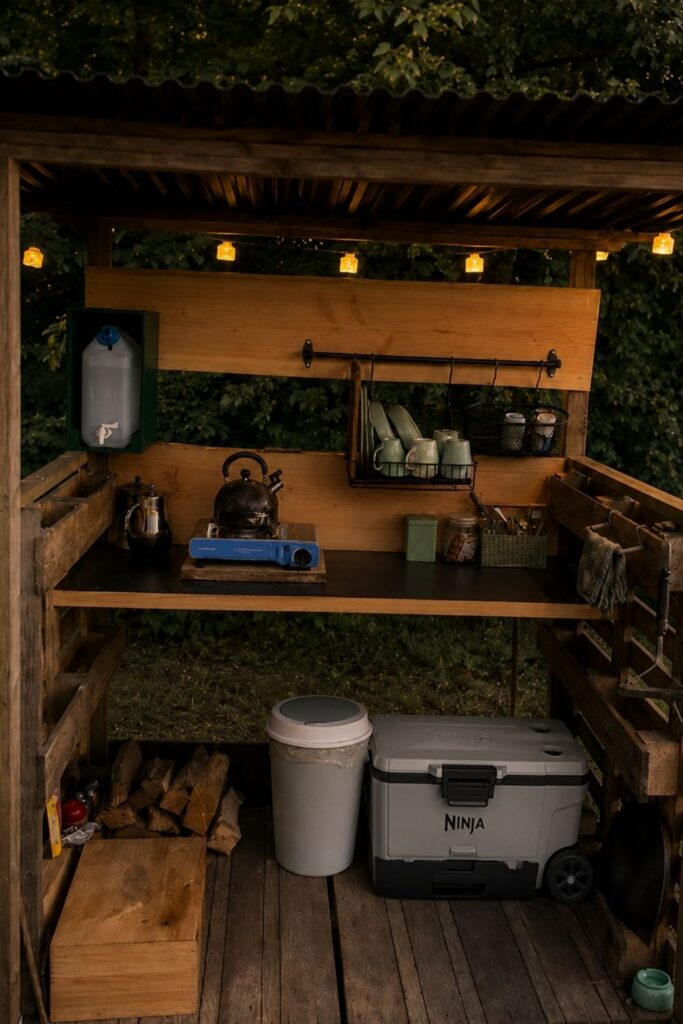
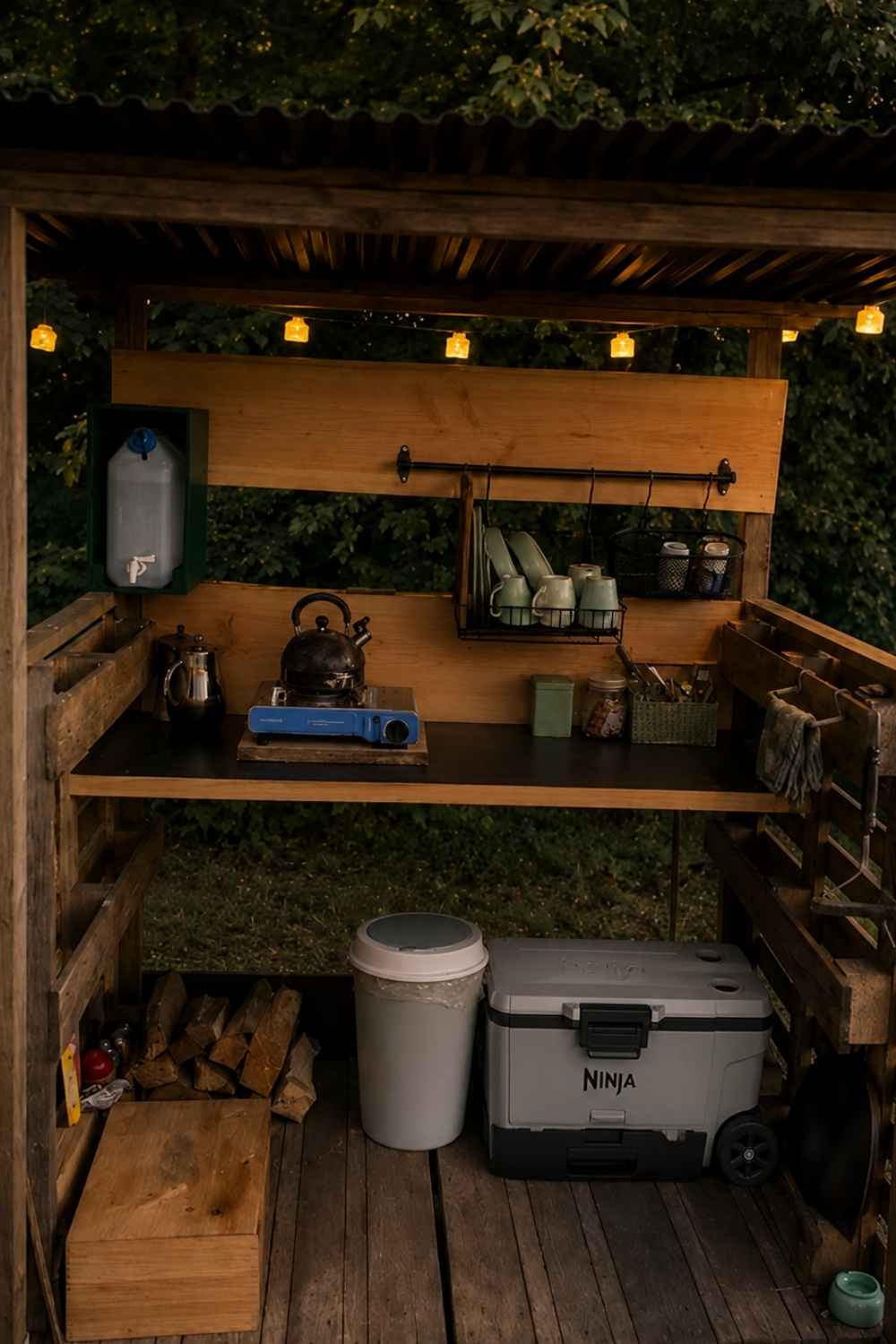
I personally use the Ninja FrostVault 61 L [affiliate link], and I genuinely love it. It is expensive, but for my setup it has been worth every cent. With enough ice and careful use, it keeps food and drinks cold for at least two days without any problem.
The feature I appreciate most is the dry storage drawer. It means grill food and more delicate items can stay cold without sitting directly in melting ice. You do not have to dig through wet packaging, and everything feels much more organized.
If you want a high-end option, the Ninja FrostVault [affiliate link] is the one I personally use and recommend.
Another premium alternative is a Petromax passive cooler [affiliate link], available in different sizes. If you prefer a more budget-friendly but still solid solution, the IGLOO IP42C [affiliate link] is worth considering.
The main lesson: for a proper camping trip, I would rather invest in one really good cooler than buy several mediocre ones.
Idea #2: Use Enough Ice or Frozen Cooling Packs
A passive cooler can only work well if you give it enough cold mass.
Ice, frozen cooling packs and frozen water bottles all help keep the temperature inside the cooler low. The mistake many people make is using too little ice and expecting the cooler to do all the work on its own.
For passive cooler camping, it is better to pack generously. Use ice around drinks, cooling packs along the sides and top, and frozen bottles where they fit.
I usually work with ice, but cooling packs are a good option too. The important thing is to keep the cold distributed throughout the cooler instead of placing one small pack in a corner and hoping for the best.
If your cooler has separate areas, use them wisely. Drinks can sit with the ice, while more delicate food can go into a dry zone or sealed containers.
Camping during summer? These hot weather camping tips will help you stay cooler and more comfortable.
Idea #3: Pack the Cooler Correctly

How you pack your cooler can make a big difference.
Heavy and less delicate items can go lower in the cooler. More sensitive food should be protected in containers, screw-top jars or sealed boxes. Cooling packs work well on top and along the sides because cold air sinks and helps keep the inside temperature stable.
In my own cooler, I usually keep drinks in the main area with the ice. Grill food goes into the dry zone so it stays cold but does not end up floating in melted ice water.
For a simple camping cooler system, think in zones:
- drinks and ice,
- sensitive chilled food,
- dry or protected cold storage,
- and items you need frequently.
The less you have to search, the less time the cooler stays open.
This is one of the easiest ways to keep food cold camping without adding extra equipment.
Idea #4: Keep Wet and Dry Food Separate
One of the most annoying parts of using a basic cooler is dealing with wet food packaging.
As the ice melts, cardboard softens, labels peel off and everything starts to feel messy. This is especially frustrating with grill food, cheese, butter or anything that should stay clean and dry.
That is why a cooler with a dry zone like the Ninja Frost Vault Cooler (affiliate) is so useful. If you do not have one, you can create a similar system with sealed plastic containers, screw-top jars or waterproof bags.
Store anything delicate in a separate container before it goes into the cooler.
This helps with keeping food dry, avoiding cross-contamination, making the cooler easier to clean and finding what you need quickly.
Good food storage camping is not only about temperature. It is also about keeping food protected, organized and easy to use.
Idea #5: Keep the Cooler in the Shade
Even the best cooler will struggle if it sits in direct sun all day.
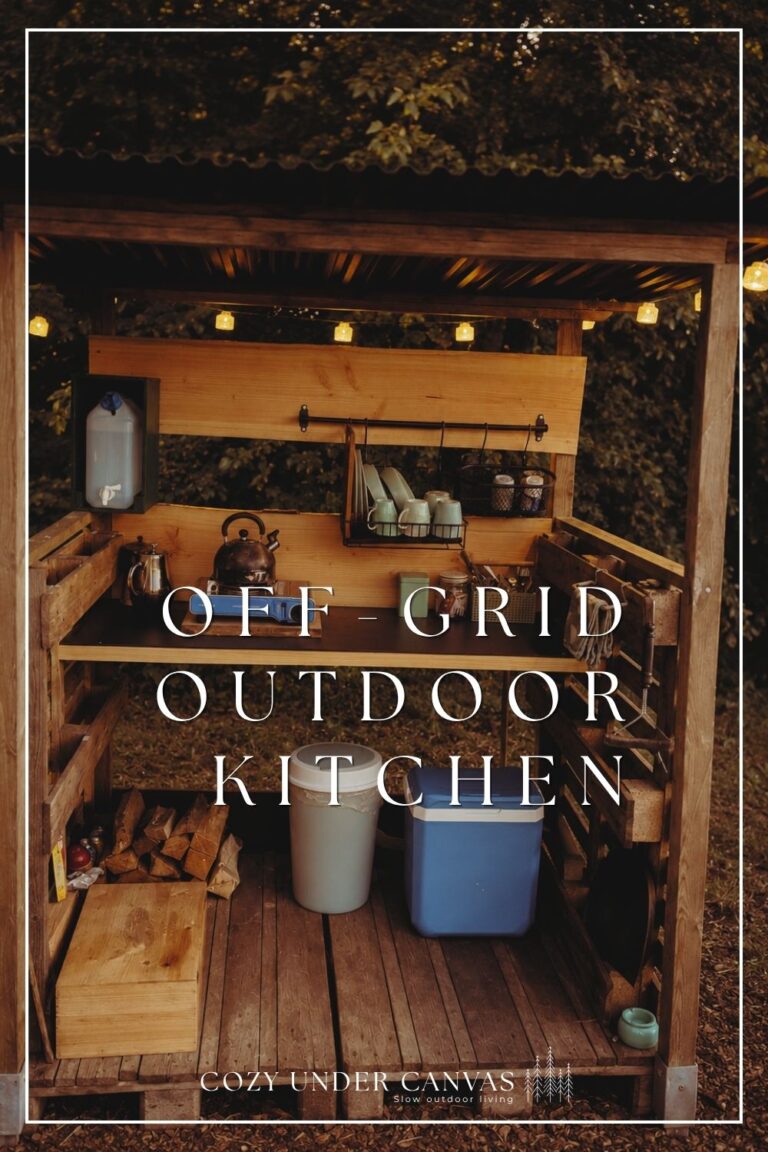
At my campsite, the cooler stays beside the outdoor kitchen in the shade. This simple habit helps it stay cold for longer and makes the whole camp kitchen more comfortable to use.
Avoid leaving your cooler in a hot car or on sun-heated ground. If possible, place it on wood, grass or another cooler surface rather than dark stone or asphalt.
You can also throw a light-colored towel or blanket over the cooler for extra shade, as long as it does not block any necessary ventilation or make the lid harder to close properly.
If you are planning a full camp kitchen setup, see this off-grid outdoor kitchen guide.
Discover more ideas
Idea #6: Open the Cooler as Little as Possible
Every time you open the cooler, warm air gets in.
This sounds obvious, but it is one of the biggest reasons food warms up faster than expected. If everyone keeps opening the cooler for drinks, snacks and small items, the cold air disappears quickly.
Keep the things you reach for most often near the top.
If you are camping with several people, it can be useful to separate drinks from sensitive food. Drinks are opened more frequently, while meat, dairy and prepared meals need more stable cooling.
For a short trip with one large cooler, smart organization can be enough. For longer trips or larger groups, a separate drink cooler may be worth it.
The basic rule is simple: Know what you need before you open the lid.
Idea #7: Freeze Water Bottles for Extra Cooling

Frozen water bottles are one of the easiest camping cooler ideas.
They help keep the cooler cold, do not create loose water as quickly as ice, and once they thaw, you can drink the water. I would not rely on frozen bottles as your only cooling method for sensitive food, but they are very useful as part of the system.
Place them along the sides, on top of food, between drinks or in empty spaces inside the cooler.
They work especially well for short trips, hot weather and camping without electricity.
Just remember: frozen water bottles are helpful for cooling, but you should still bring enough separate drinking water. Staying hydrated matters more than keeping every drink perfectly cold.
Idea #8: Choose Meals That Need Less Refrigeration
The easiest way to keep food cold while camping is to bring less food that needs constant cooling.
That does not mean eating boring meals.
It means planning food around your setup instead of trying to recreate a full kitchen. For camping without electricity, choose meals that are simple, quick and based on shelf-stable ingredients whenever possible.
Some good options include:
- pasta with a ready-made sauce,
- homemade preserved sauce in a jar,
- rice or couscous dishes,
- bread with simple toppings,
- muesli,
- oats,
- nuts,
- fruit,
- canned soup,
- and vegetables that do not need immediate refrigeration.
Pasta with a good sauce is one of my favorite off-grid meals. It does not need to be cooled before cooking, it is quick to prepare and it almost always works.
Use the cooler for the things that truly need it: grill food, dairy, drinks and anything perishable.
Idea #9: Store Dry Food in Secure Boxes

Off-grid food storage is not only about keeping food cold.
It is also about keeping dry food organized, protected from moisture and safely away from insects or animals.
I use a foldable camping storage box [affiliate link] near the outdoor kitchen. It holds dry food, some cookware and supplies that do not belong in the cooler. It is practical, simple and still looks good enough to keep visible.
At my setup, I also use an old wine crate in the outdoor kitchen, which works well for some items. But anything that could attract animals should be sealed properly.
This is especially important in forest or wilderness areas. If you are camping somewhere with bears or other wildlife, always follow local food storage rules and use proper animal-safe storage solutions.
Food storage camping is about comfort, but also responsibility. You do not want to attract animals to your campsite.
Idea #10: Know When Food Is No Longer Safe
Keeping food cold while camping is also a safety issue.
If perishable food gets too warm for too long, it may no longer be safe to eat. This includes meat, fish, dairy, prepared meals and anything that normally belongs in a refrigerator.
A cooler that still contains ice or very cold packs is a good sign. A cooler full of lukewarm water is not.
When in doubt, throw it out. That may feel wasteful, but it is better than getting sick on a camping trip.
To reduce the risk:
- pack perishable food carefully,
- keep the cooler closed,
- store it in the shade,
- use enough ice,
- avoid leaving food out on the table,
- and eat the most sensitive food first.
For example, grill food should be used early in the trip rather than kept until the last evening of a warm weekend.
A good camping food plan is not just about what tastes nice. It is also about what can be stored safely without electricity.
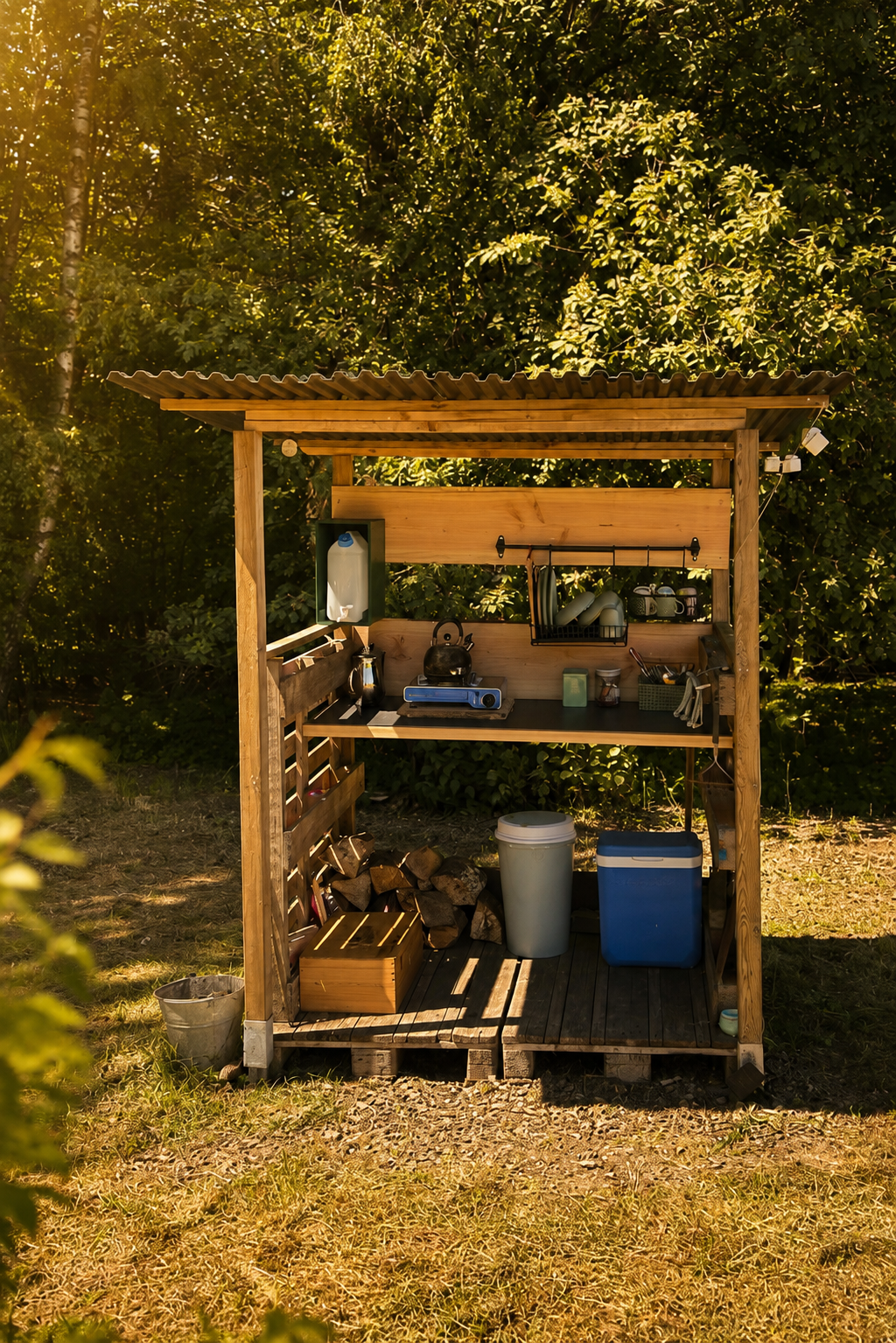
Discover how I build my off-grid outdoor kitchen.
For outdoor cooking and seating inspiration, discover these cozy campfire setup ideas.
SHOP MY COZY OFF-GRID OUTDOOR KITCHEN SETUP [Affiliate / Adverts]
Ninja Frost Vault Passive Cooler
Keeping Food Cold Camping Without Electricity
Learning how to keep food cold while camping without electricity is mostly about preparation.
You need a good cooler, enough ice, a shaded place to store it and a simple packing system. You also need to choose meals that fit the reality of outdoor living.
For me, the biggest difference came from investing in a high-quality passive cooler. The Ninja FrostVault [affiliate link] made off-grid food storage feel much easier because drinks, ice and delicate food can stay organized and cold without everything getting wet.
But even the best cooler works better when the whole system makes sense.
Keep cold food cold. Store dry food safely. Bring enough water. Open the cooler less often. Eat sensitive food early.
That is how camping without electricity becomes simple, comfortable and much less stressful.
Products Mentioned
- Ninja FrostVault 61 L passive cooler [affiliate link]:
https://amzn.to/4ycGIf2 - Petromax passive cooler, premium alternative [affiliate link]:
https://amzn.to/4wpVQUA - IGLOO IP42C, budget-friendly option [affiliate link]:
https://amzn.to/4frPNJy - Foldable waterproof camping storage box [affiliate link]:
https://amzn.to/495z8Iu - 10-liter water container with tap [affiliate link]:
https://amzn.to/44S7D2e
Affiliate disclosure: I only recommend products that I personally use and that both I and my glamping guests have been happy with. Where I mention alternatives that I do not personally use, I make that clear. Some links in this article are affiliate links. If you purchase something through one of these links, I may earn a small commission at no additional cost to you. By using these links, you help support Cozy Under Canvas and make it possible for me to continue creating practical camping, glamping and outdoor living content.