

10 Hot Weather Camping Tips: How to Keep Your Tent Cool
These practical hot weather camping tips show how to keep your tent cool, create shade, improve airflow, protect food and sleep more comfortably in summer.
Camping in hot weather can sound dreamy at first: long evenings outside, warm mornings and plenty of time in nature. But once the sun heats up your tent, your bedding feels sticky and the cooler starts struggling, a summer camping trip can quickly become uncomfortable.
The good news is that a few simple choices can make a big difference. Shade, airflow, cold drinks, breathable bedding and a little planning can help you stay much more comfortable while camping in the heat.
These hot weather camping tips focus on simple, practical ways to keep your tent cooler and make summer camping feel calmer, safer and more enjoyable.
Save this idea for later
1. Choose a shaded campsite
The easiest way to keep your tent cool is to stop it from heating up too much in the first place.
When camping in hot weather, look for a campsite with natural shade from trees, especially during the hottest part of the day. Morning sun can be pleasant, but strong afternoon sun can turn a tent into an oven.
If you have a choice, avoid placing your tent on dark gravel, asphalt or exposed dry ground that stores heat. A grassy or woodland-edge campsite often feels cooler and softer.
Also pay attention to the direction of the breeze. A tent that catches moving air will feel much better than one placed in a still, enclosed corner.
Hot weather camping tip: Choose shade first, view second. A beautiful sunny spot may look perfect when you arrive, but it can become uncomfortable by midday.
For more practical comfort ideas, read these off-grid campsite ideas for a cozy forest retreat.

2. Create extra shade with a canopy or tarp
If natural shade is limited, create your own.
A canopy, tarp or simple shade sail can make a huge difference during summer camping. The key is to shade the tent before the sun hits it directly. It is much harder to cool a tent down once the heat has already built up inside.
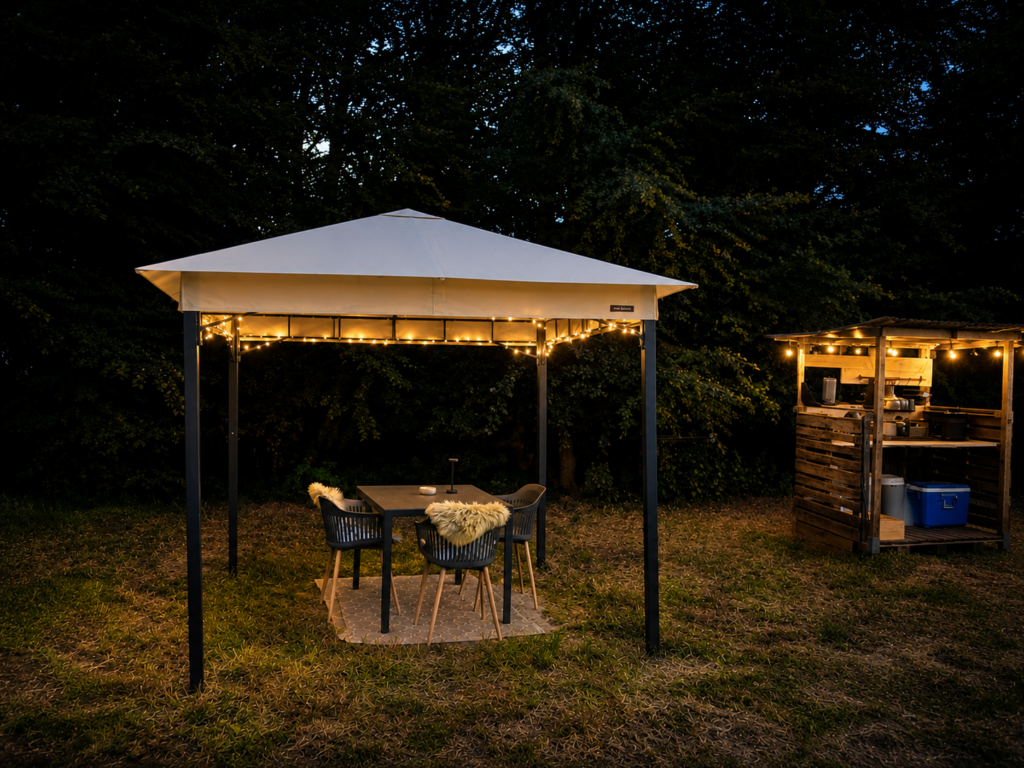
At my own off-grid campsite, the covered outdoor seating area is one of the most useful parts of the entire setup in warm weather. It gives you somewhere to eat, read, play cards or simply rest without hiding inside the tent.
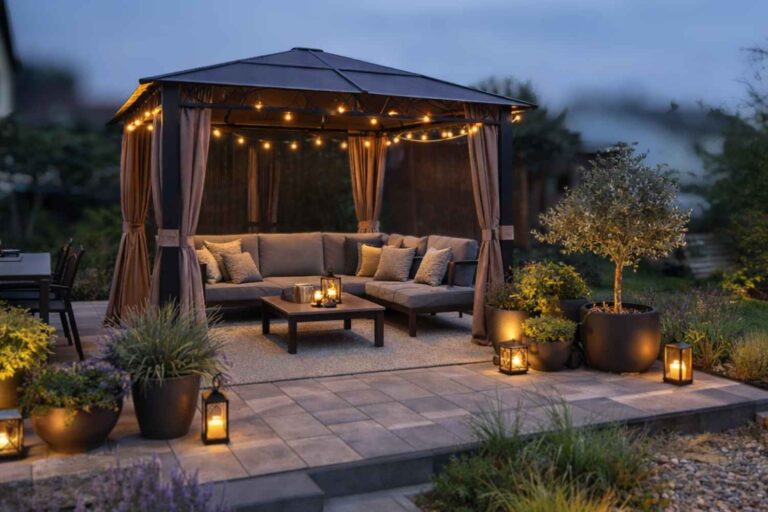
For hot weather camping, shade should cover more than the tent. Try to create at least one comfortable outdoor living area where you can spend the warmest hours of the day.
3. Open windows and vents early in the morning and after sunset
Tent ventilation matters most before the heat builds up.
Open windows, doors and vents early in the morning while the air is still fresh. This helps release warm air that collected overnight and allows cooler morning air to move through the tent.
Once the sun becomes strong, you may need to adjust depending on your setup. If opening the tent brings in a breeze, keep the airflow going. If the sun is shining directly inside, use shade or partially close the sunny side while keeping vents open.
The best strategy is not simply “open everything” or “close everything.” It is to create airflow while keeping direct sun out. This is one of the simplest ways to improve tent ventilation and keep a tent cool in summer.
4. Use the rainfly strategically
A rainfly can either help or hurt in hot weather, depending on your tent and the conditions.
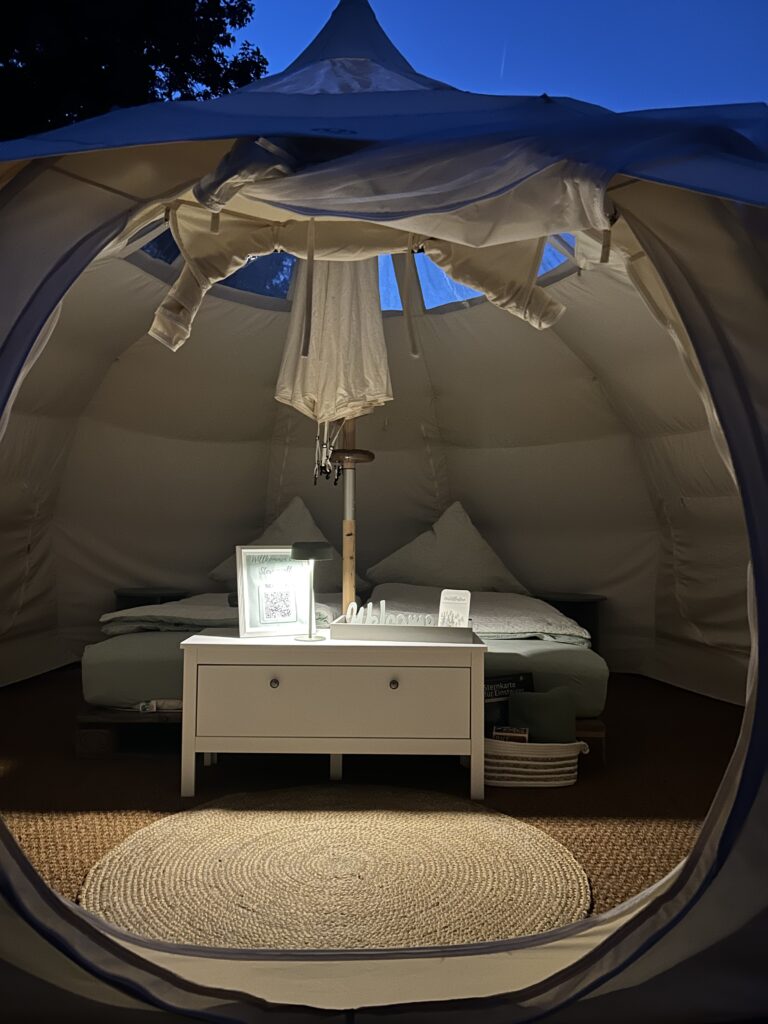
If the rainfly traps hot air close to the tent, removing or partly opening it during the day may help improve airflow. But if it creates shade or protects the tent from direct sun, it may actually help keep the interior cooler.
The best approach is to test your own setup.
If weather allows, open vents, lift edges or create gaps where warm air can escape. Avoid tightly sealing the tent during the day unless rain or storms are expected.
For canvas tents, shade and ventilation are especially important because the fabric can hold warmth once the sun has been on it for hours.
Hot weather camping tip: Think of your rainfly as a flexible shade and weather tool, not something that always has to stay exactly the same.
5. Add reflective shade outside the tent
Reflective blankets, emergency blankets or reflective tarps can help reduce heat when used outside the tent.
The important word is outside.
If reflective material is placed inside the tent, it may trap warmth instead of preventing it. Used above or outside the tent, it can help reflect some of the sun before it reaches the fabric.
This works best when the reflective layer is slightly raised, allowing air to move between the shade layer and the tent. Do not lay it directly on the tent fabric if it blocks ventilation or creates condensation issues.
A reflective tarp is not always the prettiest camping aesthetic, but during a heatwave, comfort comes first.
For a cozier look, combine practical sun protection with natural shade, a canvas canopy or a shaded seating area.
ESSENTIALS FOR CAMPING
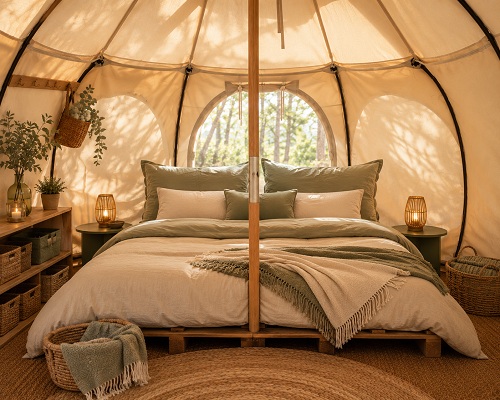
Shop our clamping setup here and discover all the little things that make your next camping trip feel like a cozy retreat in nature.
6. Keep food and drinks cold with a passive cooler
A good cooler is one of the most important pieces of summer camping gear.
For passive cooler camping, preparation matters more than size alone. A well-packed passive cooler with frozen ice packs can keep food and drinks cold for much longer than a loosely packed cooler opened every few minutes.
At my off-grid campsite, a passive cooler with several frozen ice packs can keep food cool for around 48 hours when it is packed carefully and kept in the shade.
To make your cooler work better:
- pre-chill food before packing,
- freeze water bottles and ice packs fully,
- keep the cooler out of direct sunlight,
- open it as little as possible,
- separate drinks from temperature-sensitive food if you can,
- and fill empty spaces so warm air does not circulate inside.
A cooler does not replace proper food safety, especially during very hot weather, but it can make short summer camping trips much more comfortable.
Here are 2 cooler that I highly recommend:
If you want a high-end cooler with a more premium feel, the Ninja FrostVault (affiliate) is the one to consider. It is the more luxurious option for anyone who wants a reliable cooler that feels well-designed and built for serious summer camping.
For a more budget-friendly but still very practical choice, the IGLOO IP42C (affiliate) is a great alternative.
7. Freeze water bottles before your trip
Frozen water bottles are one of the easiest hot weather camping hacks.
They work as ice packs inside your cooler, and once they melt, you can drink the water. This makes them useful twice: first for cooling, then for hydration.
For camping in a heatwave, bring more drinking water than you think you will need. Hot weather, sweating, walking, cooking and spending the whole day outdoors can all increase how much fluid you need.
Keep water easy to reach throughout the day rather than waiting until you feel very thirsty.
A simple water station near your tent or seating area can help you drink more often. Add a refillable bottle, a water container with a tap or a small table with drinks in the shade.
Hot weather camping tip: Frozen water bottles are especially useful for short trips where you want to avoid buying loose ice.
8. Choose breathable bedding and loose clothing
Sleeping in a tent during summer heat is much easier when your bedding can breathe.
Heavy duvets, synthetic blankets and thick sleeping bags can feel uncomfortable on hot nights. Instead, use light cotton or linen sheets, a thin blanket and breathable layers that can be adjusted during the night.
The same principle applies to clothing.
Loose, light-colored and breathable clothing will usually feel more comfortable than tight or dark fabrics that hold heat. For warm summer nights, choose simple layers that allow air to move around your body.
If temperatures drop after midnight, keep one light blanket nearby rather than starting the night under heavy bedding.
9. Cook outside and keep heat away from the tent
Cooking inside a tent is not a good idea, and in hot weather, it also adds unnecessary heat.
Use an outdoor camp kitchen, gas stove or fire-safe cooking area away from the sleeping space. Prepare meals during the cooler parts of the day when possible, such as morning or evening.
In very hot weather, plan meals that require little cooking: fresh bread with simple toppings, salads, cold pasta dishes, fruit, yogurt from the cooler, wraps, grilled vegetables in the evening or one-pot meals that do not require long cooking times.
The less heat you create near the tent, the easier it is to keep your sleeping area comfortable.
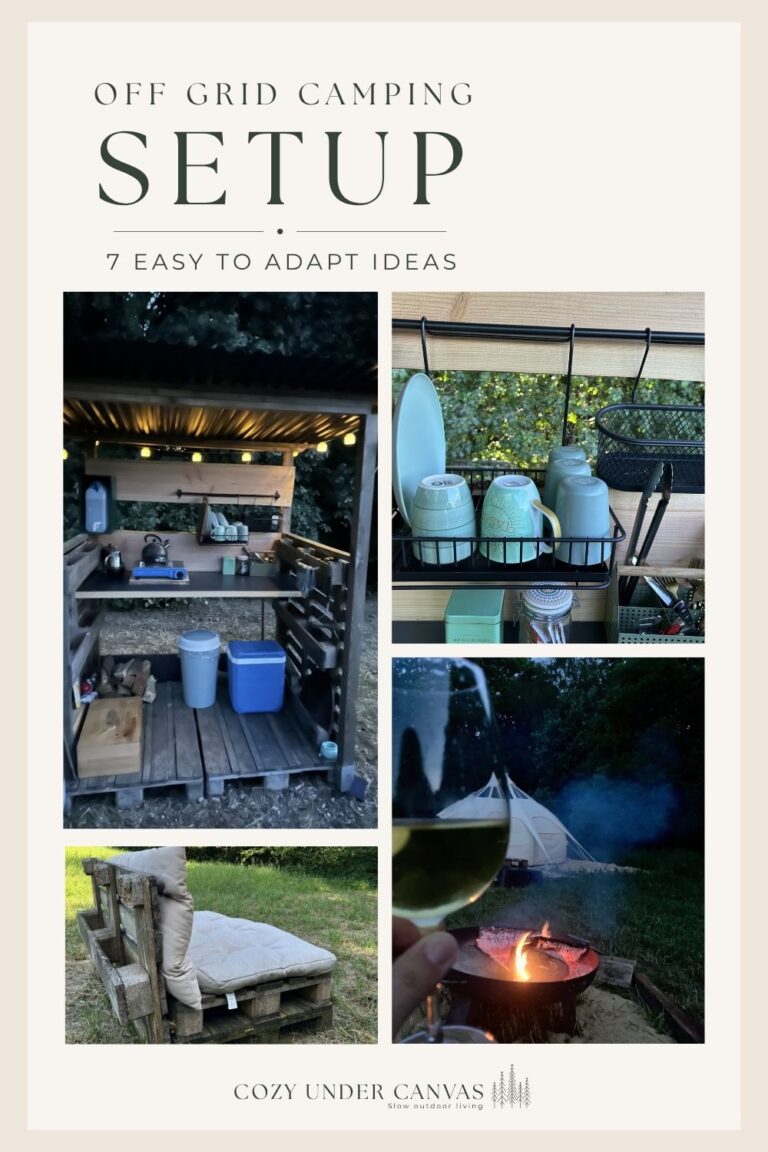
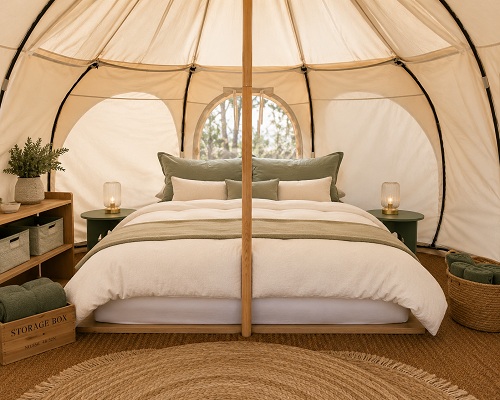
This is also where a shaded outdoor kitchen becomes especially useful. It lets you prepare food without standing in the sun or warming up the tent. If you want to keep cooking heat away from your tent, see this off-grid outdoor kitchen setup.
10. Plan your day around the heat
The best summer camping tips are not only about equipment. They are also about timing.
During hot weather, plan active things for early morning and evening. Hiking, setting up camp, carrying water or preparing the firewood all feel much easier before the hottest hours.
Use midday for shade, slow meals, reading, resting or short walks only if conditions are comfortable.
Camping in a heatwave becomes more enjoyable when you stop expecting the whole day to feel active. Let the hot hours be quiet. Save the best parts of the trip for sunrise, golden hour and the cooler night air.
Some of the most beautiful summer camping moments happen after sunset: crickets, stars, soft lighting, cold drinks and long conversations outside while the tent finally cools down.
For cooler evenings, explore these cozy campfire setup ideas.

Bonus: Use a Battery-Powered Fan if You Have One
Hot Weather Camping Safety
Hot weather camping should still feel enjoyable, not risky.
Pay attention to how you feel throughout the day. Dizziness, nausea, headache, confusion, heavy sweating, weakness or feeling unusually tired can be signs that the heat is affecting your body.
Move into shade, drink water, cool your skin and rest if you feel unwell. In extreme heat, be especially careful with children, older adults, pets and anyone with health conditions.
No campsite view is worth ignoring heat-related symptoms.
Final Thoughts on Hot Weather Camping
Camping in hot weather is not always easy, but it can still be beautiful.
The secret is to plan around the heat: choose shade, improve airflow, keep drinks cold, eat simple meals, use breathable bedding and enjoy the cooler hours of the day.
A hot summer night outdoors can feel peaceful when you stop trying to do too much. Sit outside until the tent cools down, listen to the crickets, watch the stars and let the evening move slowly.
That is the best part of summer camping.

SHOP MY COZY CAMPFIRE SETUP
[Affiliate / Adverts]
Affiliate disclosure: I only recommend products that I personally use and that both I and my glamping guests have been happy with. Some links in this article are affiliate links. If you make a purchase through one of these links, I may earn a small commission at no additional cost to you. By using these links, you help support Cozy Under Canvas and allow me to continue creating helpful camping and glamping content.